An AI-native, multi-tenant ERP that runs a restaurant end to end, from the till to the general ledger
IndustryRestaurant
Timeline15 delivery phases
PlatformWeb (multi-tenant SaaS) + offline-capable POS
The Challenge
Restaurant groups run on a stack of tools that don't talk to each other. A POS that only counts sales, inventory kept in spreadsheets, and an accountant reconstructing the month three weeks after it ended. That leaves the expensive questions unanswerable while they still matter: which dish is quietly losing money now that chicken is up 14%, why the kitchen goes through more cheese than the recipes call for, what needs ordering before Thursday. None of that is hard maths. It's that nothing connects the sale to the recipe to the ledger, so there's no single record to ask.
Our Approach
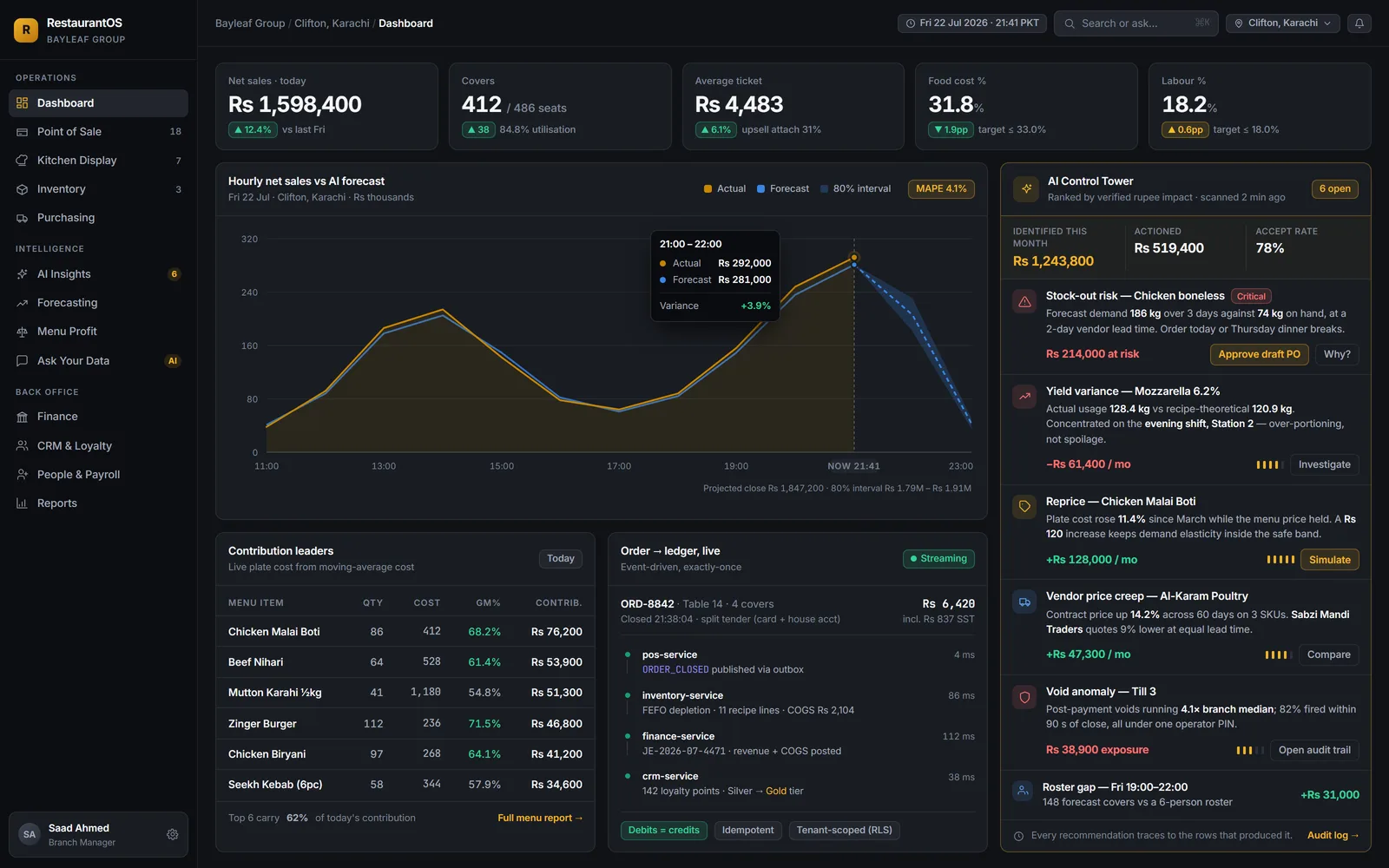
We built the connection first and the intelligence second. Closing an order on the POS publishes one event, and everything downstream follows from it: inventory depletes the recipe bill of materials in FEFO order, finance posts a balanced double-entry journal, loyalty accrues. Each step is idempotent and tenant-isolated, so a redelivered event is a no-op rather than a double-count. Correctness is enforced by the database rather than by discipline. Money is stored as integer paisa, never floating point. A deferred constraint trigger makes an unbalanced journal entry physically impossible to commit. Entries are immutable and corrections happen by reversal, so locked periods reject late postings outright. Only once that operating data was clean did an AI layer make sense on top of it. Forecasting, yield-variance attribution and menu repricing all read the same ledger the system wrote itself, and plain-English questions pass a seven-stage SQL validator (AST parse, table allowlist, PII deny-list, injected tenant and branch predicates, row cap) before executing read-only. The model writes the projection; it never writes the predicates that scope it.
What We Built
- •Touch-first POS with split tenders, per-line modifiers, till sessions and offline-capable operation
- •Kitchen display with station-routed tickets, per-item status and SLA-aware urgency
- •Inventory with recipe bills of material, moving-average costing, FEFO depletion, transfers and physical counts
- •Purchasing with tiered PO approval, goods receipt, three-way match and vendor scorecards
- •Finance with immutable balanced journal entries auto-posted from operational events, AP/AR and period close
- •Demand forecasting against vendor lead times, yield-variance attribution by shift and station, and live plate-cost menu repricing
- •Natural-language querying over the whole ERP behind a seven-stage SQL validator, read-only and tenant-scoped
The Results
- ✓Order-to-ledger loop closes without human touch: a POS sale depletes stock by recipe in FEFO order and posts a balanced journal entry
- ✓Twelve Spring Boot services plus gateway, registry and config server running as one event-driven loop
- ✓Tenant isolation enforced twice over, by a Hibernate filter plus PostgreSQL row-level security, holding across the async RabbitMQ boundary
Technologies
Java 25Spring Boot 4Spring Cloud GatewayPostgreSQL 18 (RLS)RabbitMQRedisClickHouseOPA / RegoMinIONext.js 16React 19Docker